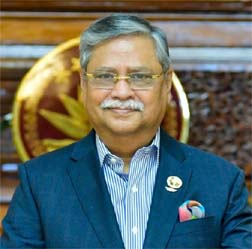
C T Online Desk: President Mohammed Shahabuddin resigned on Friday, triggering the constitutional process for an interim presidency.
National Parliament Speaker Hafiz Uddin Ahmed called an emergency press briefing at 5pm on Friday.
Following the vacancy in the office of the president, the speaker will perform the duties of the president until a new president takes office, in accordance with the Constitution.
Article 54 of the Constitution states that if the office of the president becomes vacant, or if the president is unable to perform the duties of the office because of absence, illness, or any other reason, the speaker shall perform the duties of the president until a new president is elected.
Article 123(2) of the Constitution states: “If the office of the president becomes vacant due to death, resignation or removal, a new president must be elected within the next 90 days.”
Mohammed Shahabuddin served as a commissioner of the Anti-Corruption Commission (ACC) from 2011 to 2016 before becoming Bangladesh’s 22nd president on April 24, 2023, during the Awami League government, for a 5-year term.
Under that term, he was due to remain in office until April 2028. However, he resigned nearly 2 years before completing his tenure.
Following the political changeover on August 5, 2024, several political parties, including the Anti-Discrimination Student Movement, demanded his removal. The interim government did not remove him, citing constitutional reasons, and the issue later subsided.
After the Bangladesh Nationalist Party (BNP) formed the government following its victory in the National Parliament election on February 12, discussions over replacing the president resurfaced. BNP leaders said in March that the matter had not been discussed within the party because the president still had time remaining in his tenure. News of Shahabuddin’s resignation emerged 4 months later.